Project
Digital Traffic Sign Register Baden-Württemberg
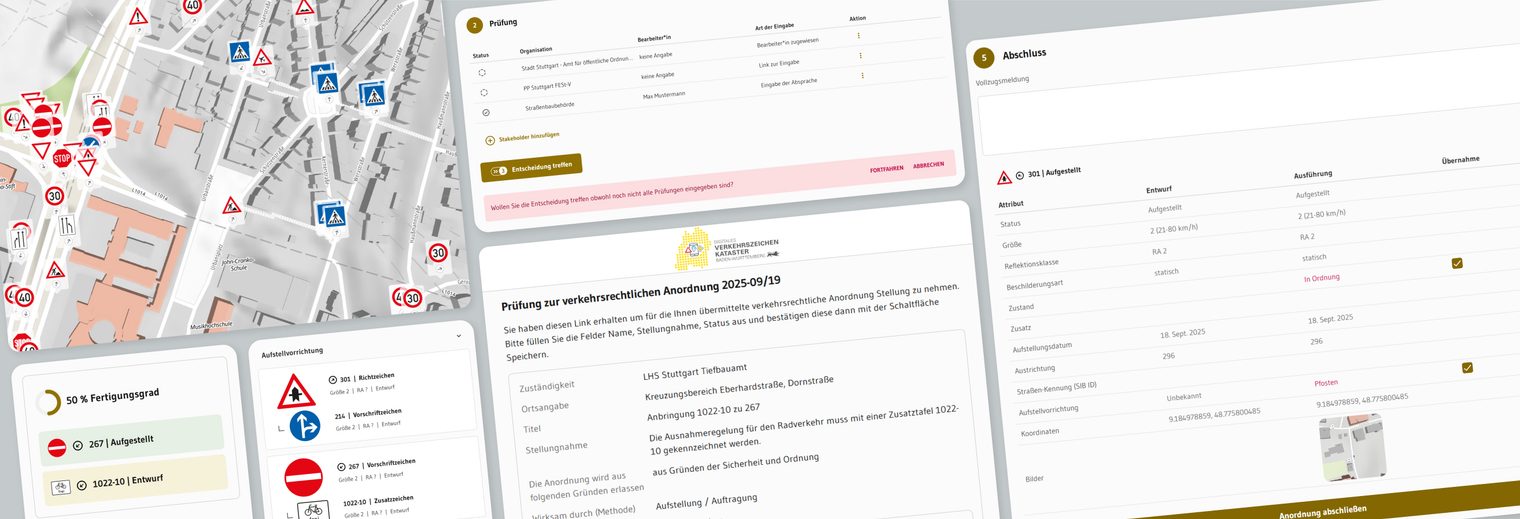
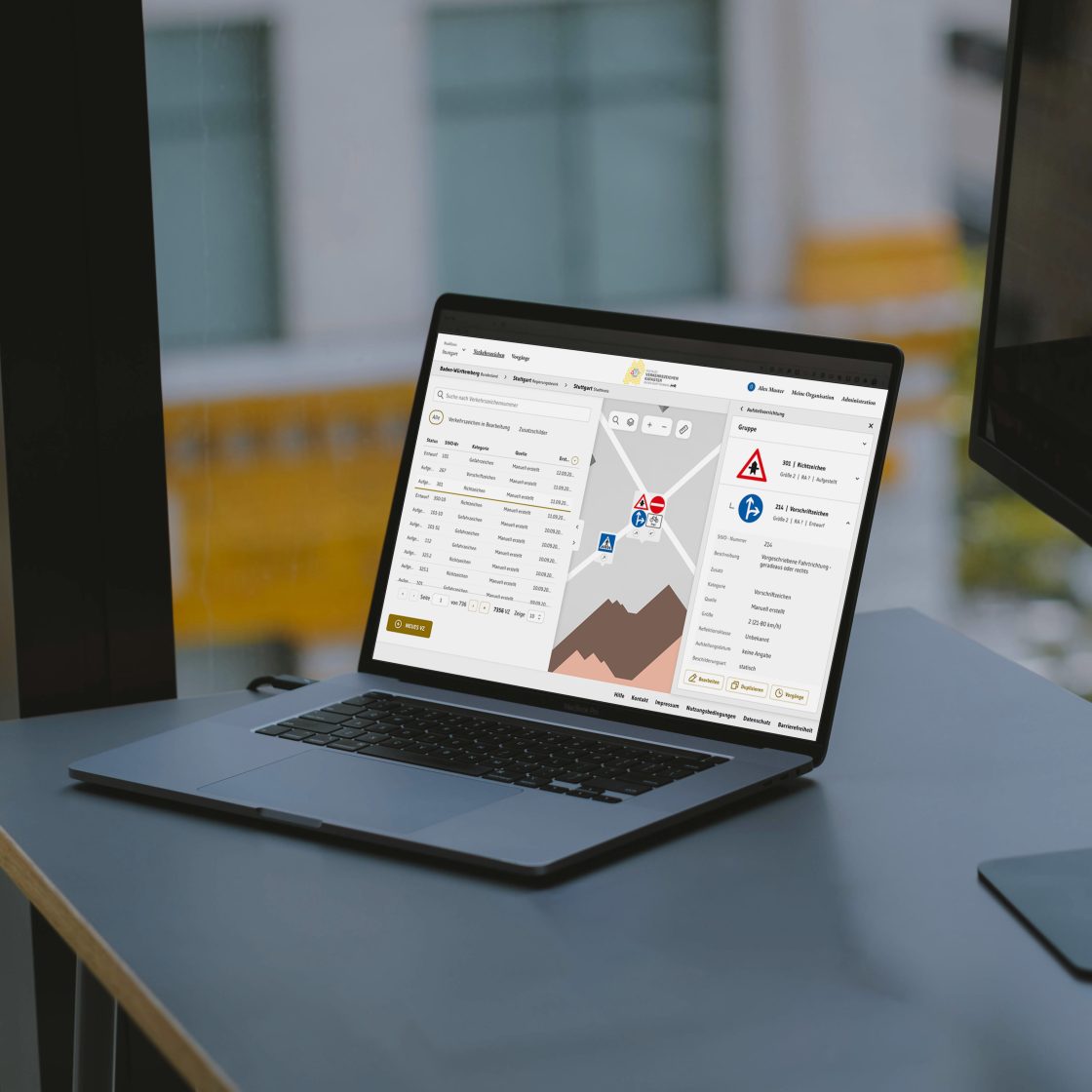
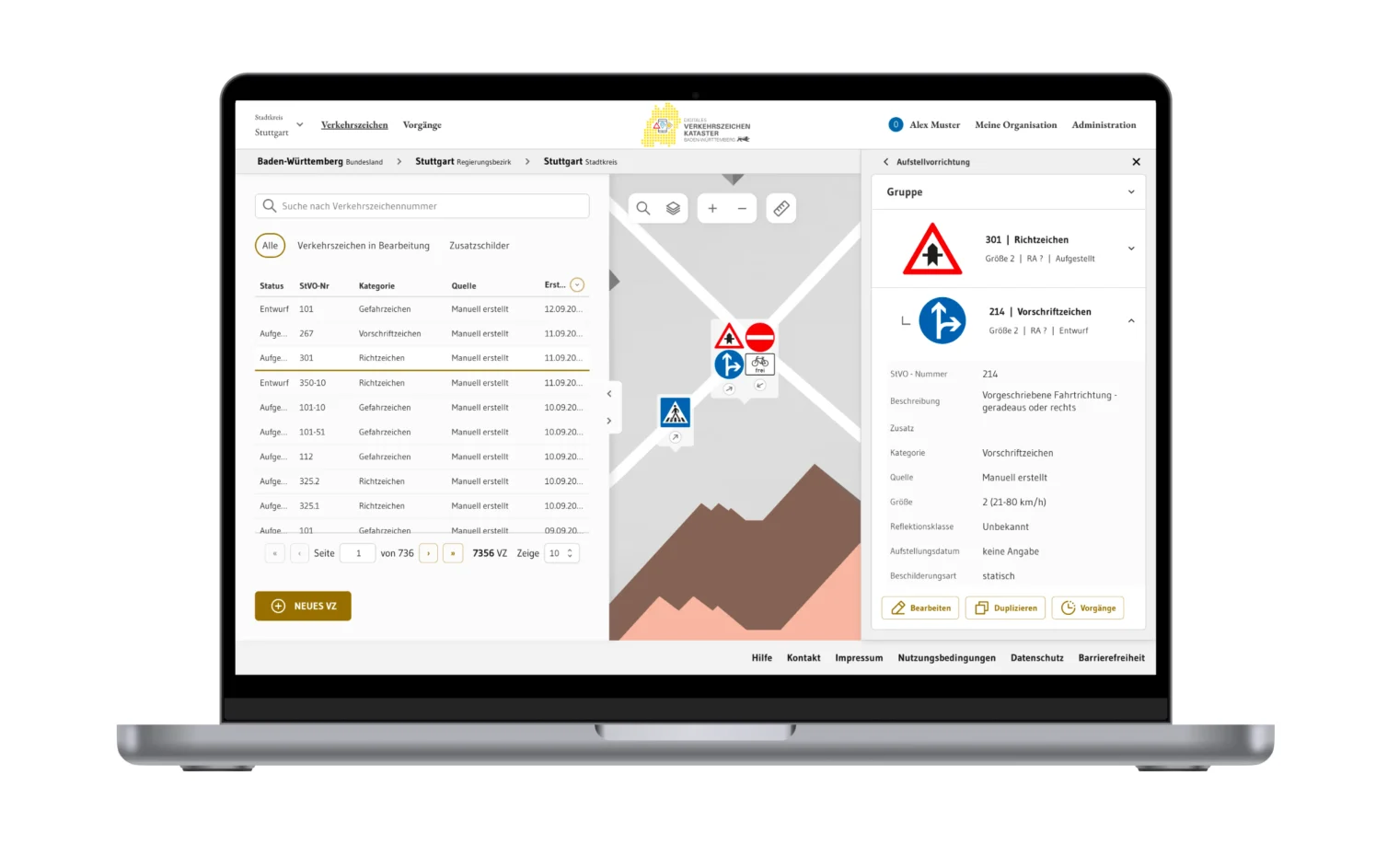
At the behest of the Ministry of Transport of Baden-Württemberg, Trafficon is developing a statewide web application that fully digitizes the process of issuing traffic regulations (VRAO) for permanently installed traffic signs. The goal is a seamless workflow for importing, managing, and evaluating data based on a digital database ("digital twin").
-
Central organisation and responsibility data
Organisational structures and responsibilities are imported periodically from an existing statewide specialist application. This allows roles and permissions to be assigned precisely – at both municipal and state level.
-
Fully digital traffic order process
The application maps the process of issuing traffic regulation orders for traffic signs digitally: including the consultation procedure, creation of an order document and logging of the installation. External data entered by the implementing body can be checked and transferred into the application. When a case is closed, it is archived and added to the case history of the traffic signs concerned.
-
Structured data model for traffic signs
A multi-level model of mounting structures, traffic sign groups and individual signs allows a wide variety of configurations in the road space to be represented realistically.
-
Open data sharing
Traffic sign data is made available via established platforms such as MobiData BW and the Mobilithek – in line with open data principles. Ongoing traffic sign data updates can be retrieved via an endpoint in the TN-ITS standard.
-
Interfaces for data import
Available traffic sign data, for example from the automotive industry, can be imported into the application. This data is converted into a standardised format and can be enriched with further attributes – for maximum interoperability.
-
More features
The web application is being continuously extended. This includes validation functions for permissible traffic sign combinations, the areas of validity of traffic signs and extensive options for analysing the data. Additional import interfaces are intended to increase interoperability with existing municipal and regional systems.