

Project

KlimaFIT Research Project on Heat Resilience

KlimaFIT explores how to balance two goals: avoiding physical exertion in hot weather while also building resilience to heat.

Smiling woman with helmet leaning against her bike

Project goals

Heat as a Challenger for Active Mobility

KlimaFIT explores how to balance two goals: avoiding physical exertion during periods of heat while simultaneously strengthening resilience.

The project investigates how promoting active mobility, supported by digital heat and mobility management, can help address this challenge. It builds on the multiple benefits of active mobility – combining advantages for both climate and health.

Project duration
2024 – 2027
Project partner
Paracelsus Medizinische Universität, Paris Lodron Universität Salzburg, Helios, Salzburg Research Forschungsgesellschaft

Promoting Sustainable Behaviour Change for More Active Mobility

We aim to develop measures that motivate and empower people to integrate environmentally friendly and health-promoting forms of mobility, such as walking and cycling, more into their everyday lives. Through targeted strategies and incentives, we support them in adopting sustainable behaviours and maintaining them in the long term.
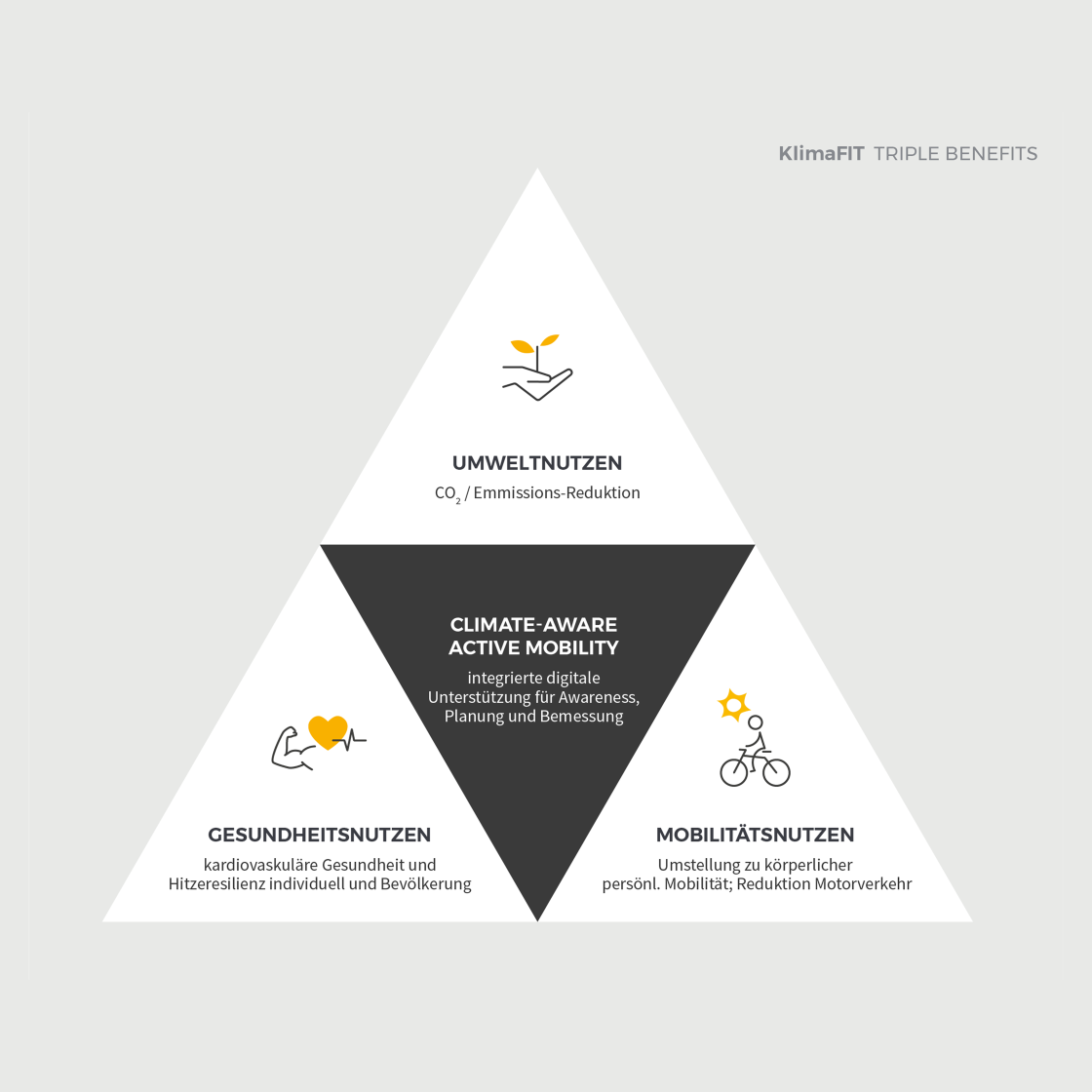
The triple benefits of environmental, health and mobility benefits come together to create Climate-Aware Active Mobility.

Increasing Heat Tolerance

Physical activity offers numerous health benefits and, by improving cardiovascular fitness, can help increase resilience to high temperatures. This is particularly true when physical activity takes place in warm conditions.

Scientific studies show that just six to ten days of 45–60 minutes of physical activity in warm conditions can lead to significant acclimatization effects in healthy individuals. However, little is known about whether these effects apply to people with pre-existing health conditions in the same way.

Reduction of CO₂-Emissions

This is achieved by promoting active mobility as an alternative to private motorized transport, thereby reducing carbon dioxide emissions.

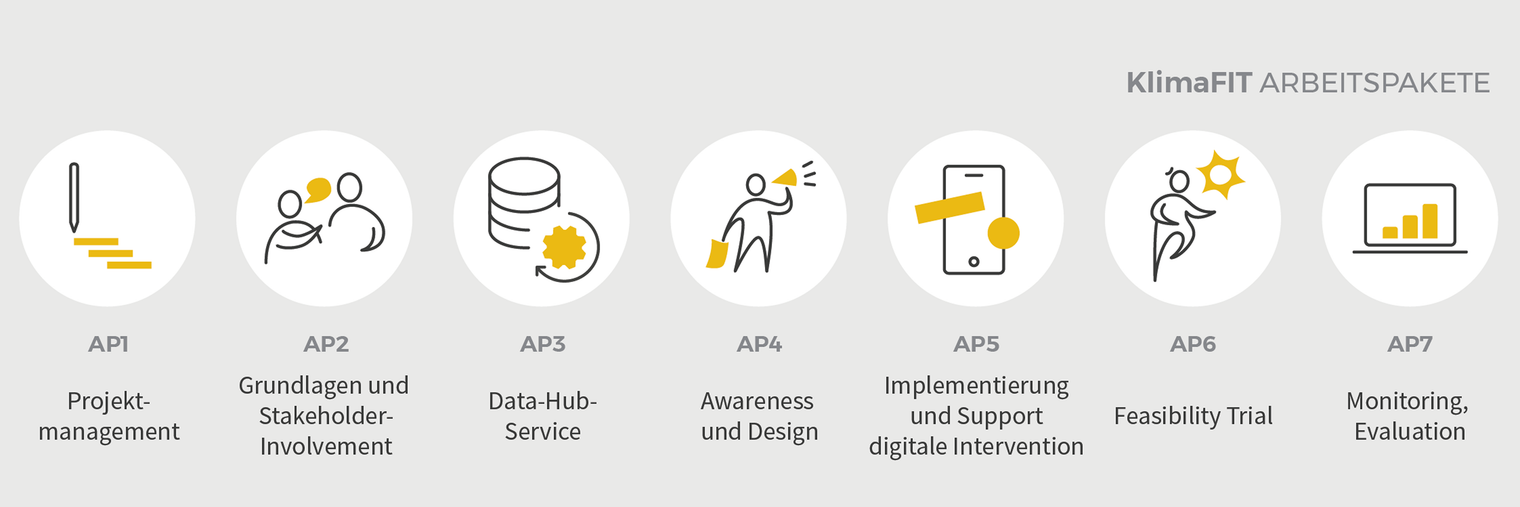
Overview of the KlimaFIT work packages.

Everyday choices, lasting change

In addition, we are developing a specialised shade-optimized routing system to promote active mobility while incorporating health-related criteria. The app encourages participants to make healthy and environmentally friendly choices through targeted route recommendations and incentives, such as rewards or playful elements.

The key research and design challenge is to develop nudging, gamification and other motivational elements and tailor them to the respective situation. At the same time, the aim is to raise awareness of the positive effects on health, heat resilience and low-carbon mobility, while evaluating the overall impact through monitoring.

The potential benefit of KlimaFIT for customers and end users lies in establishing a healthy and climate-friendly lifestyle by integrating active mobility into everyday life.

Consortium

Bringing Expertise Together

A team of experts from diverse fields – including medicine, communication, behavioural research, sustainable mobility, geoinformatics, IT and digital health – is working together to advance the research project.

Trafficon
Health-oriented routing, mobility management and visual analytics
trafficon.eu
Paracelsus Medizinische Universität
Expertise in environmental and exercise physiology and rehabilitation research
pmu.ac.at 
Paris Lodron Universität Salzburg
Geospatial data and spatial analysis for sustainable and healthy mobility
plus.ac.at
Helios
Behaviour change and design thinking methods
helios.bz
Salzburg Research Forschungsgesellschaft
Digital Health Technologies
dhp.lbg.ac.at
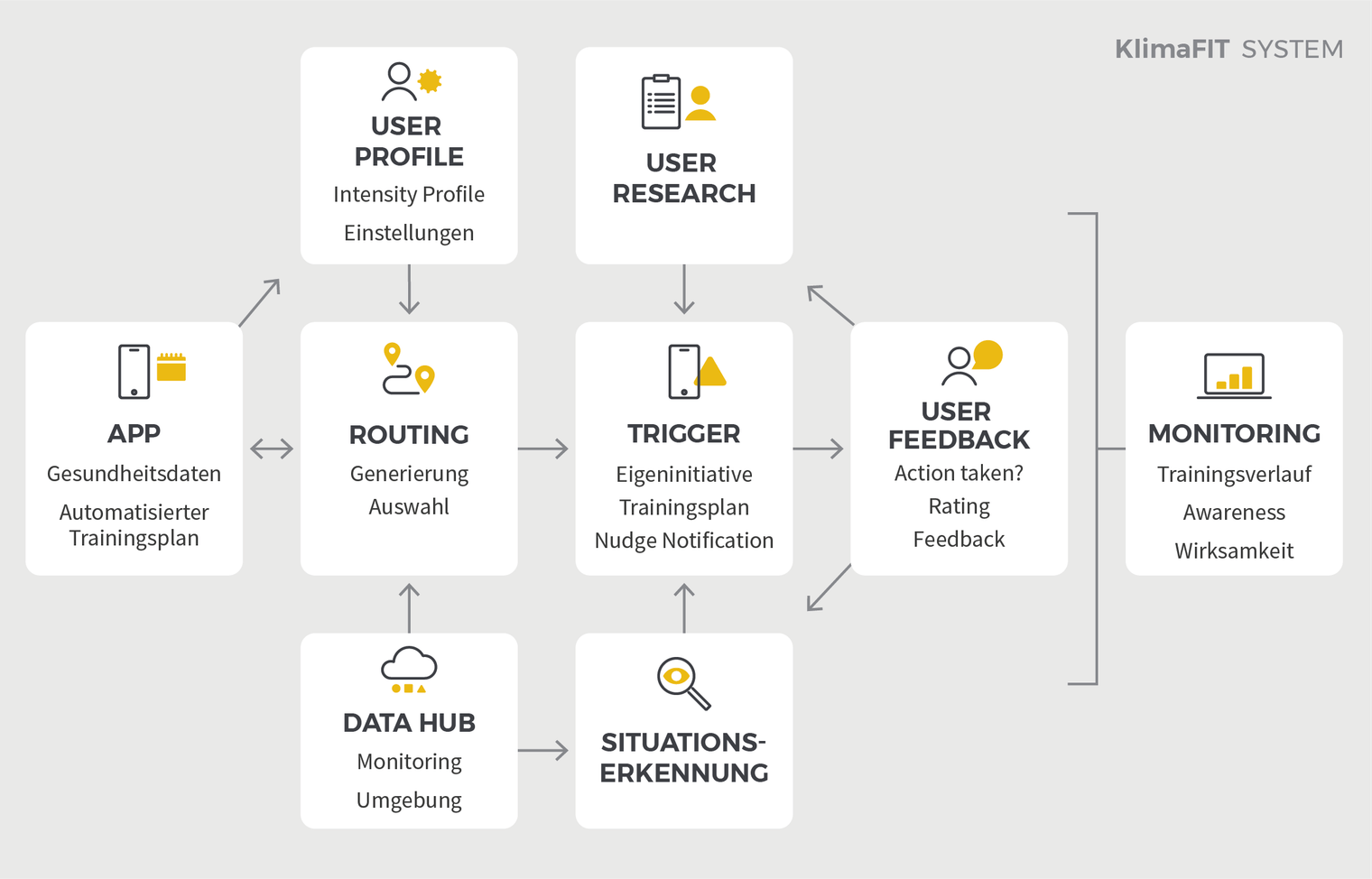
Overview Klimafit

Outlook

What’s next?

Developing KlimaFIT further into a digital health application opens up new opportunities to put the research findings into practice, supporting long-term public health and climate action.

The KlimaFIT project is funded by the Austrian Research Promotion Agency (FFG) and the Federal Ministry for Innovation, Mobility and Infrastructure (BMIMI) as part of the “Digital Solutions for People and Society 2023” funding programme.